Headshots for authors, for the jacket and the bio page
Headshots for authors, made from three photos you already have — forty author photos with enough range for a jacket, a bio page, a festival programme and a press kit.
The photo that goes on the jacket. And stays there for three printings.
Download portraits for your jacket, bio page and press kit.

The photo that goes on the jacket and stays there
An author photo has a longer life than any other kind. It goes on the back flap, then into the publisher's catalogue, then to every festival that asks for two hundred words and a picture, then onto the bookshop's event page, then into whatever the local paper runs. Nobody re-commissions it between printings. So the question is not whether it is a good photograph today but whether it will still be a fair description of you when somebody meets you at a signing three years from now.
That argues against two things photographers are often asked for. It argues against heavy retouching, because the version of you that turns up is the one without it. And it argues against a picture styled to a single book — the moody one for the crime novel — because the next book is not that book and the photograph outlives it.
Forty, because a press kit needs more than one
The requests do not arrive in one shape. A jacket wants a portrait crop, usually tight. A festival programme wants something that survives being printed at the size of a postage stamp next to eleven other writers. A newspaper picture desk asks for a horizontal, because their template is horizontal. A bookshop's event page wants a square for the social card. A publisher's press kit asks for all of them at once, in a folder, by Friday.
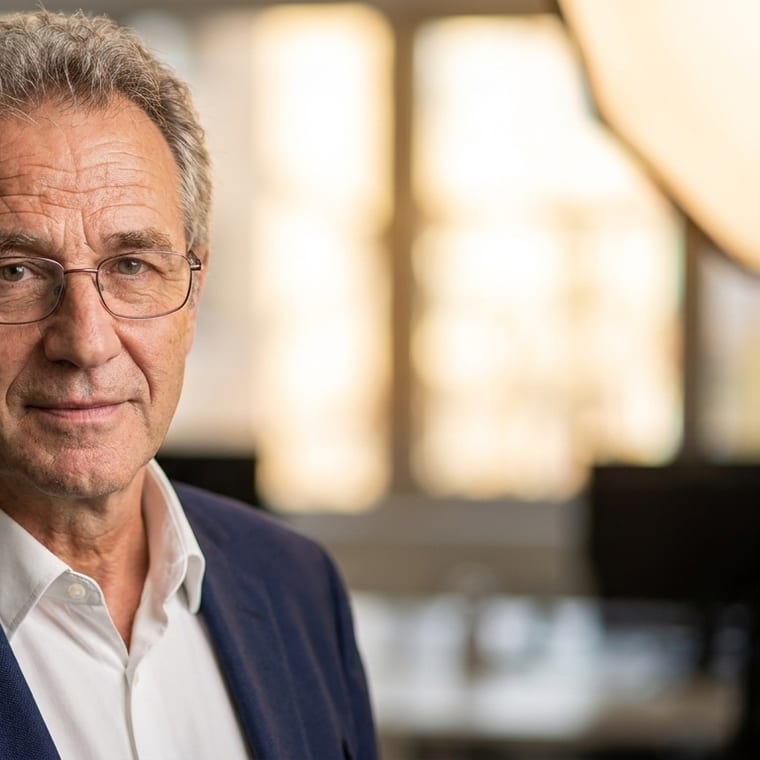
Forty portraits from one set of references covers those without a second sitting: tight crops, medium crops, and a 16:9 frame composed wide rather than cut down from a portrait, which is the difference between a banner with your head in it and a banner with your forehead in it.
Portrait crop, wide crop, and what prints
The portrait frames come back at 1200 × 1500 pixels and the wide ones at 1792 × 1008. At 300 dpi, the print standard a publisher will quote you, 1200 × 1500 is four inches by five. That covers a flap portrait, a festival programme, a catalogue entry and every screen use there is. It does not cover a full-page press photograph or a poster, and a page that told you otherwise would be wasting your afternoon.
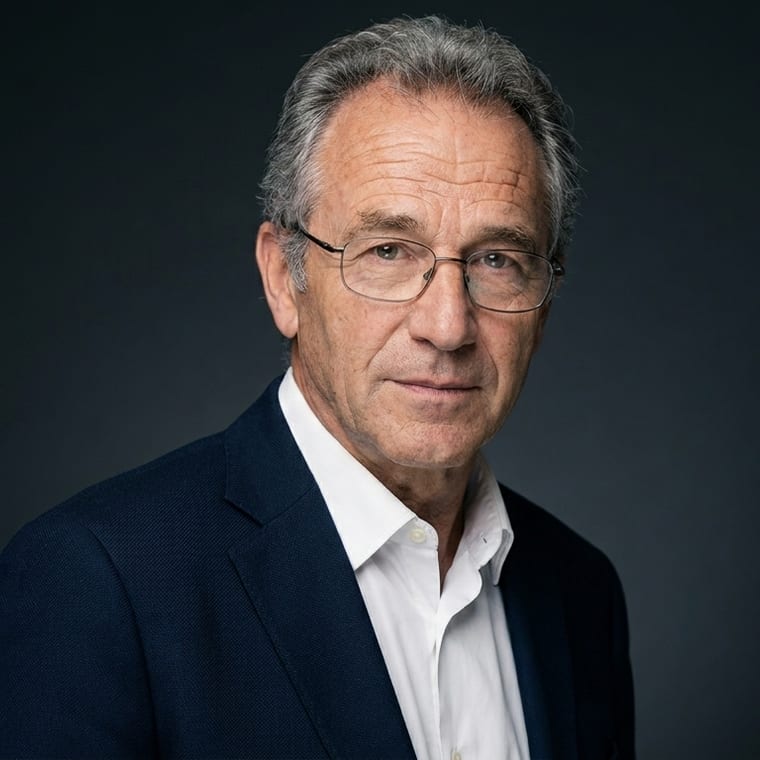
The rest is preference, and the plain version is worth saying: a warm canvas or a neutral ground rather than a bookshelf, light from one clear direction, and an expression you would not mind being introduced by. Backgrounds with books in them are the cliché of the genre for a reason — they were once a way of saying what you did, and they now mostly say that the photograph was taken in a hurry in a study.
Three setups, large enough to judge.
Shown at a size a jacket flap never gets, because this is where you check the things print exaggerates: whether the skin still has texture, whether the shadow under the eye is light or dark, whether the edge of the shoulder is clean against the ground. Your order includes 40 photos.

Send three photos
From your phone, as they already are. The model reads your face from the references and does not train on them, so there is no run to wait through.
Choose your photo categories
After payment, choose one or two categories for your 40 photos. Professional gives the studio and window-light grounds; editorial gives the textured, more directional ones.
Forty come back
In minutes. Tight crops for the jacket, medium ones for a programme, and a 16:9 composed wide for an event page.
- 40 portraits, yours to keep
- Portrait frames at 1200 × 1500 and wide frames at 1792 × 1008
- Warm canvas, neutral and window-light grounds
- Delivered in minutes, not overnight
Your pack: Profile picture
Download individual photos or the full set.
Sales tax is added at checkout where your state charges it.